Jesus Makes All Things New: Graphics & Crafts
When a new design asset lands on my desk for a real client project, I look for three things: emotional resonance, technical flexibility, and commercial viability. Jesus Makes All Things New arrived in my inbox as a t-shirt ready print, but my first impression told me this piece could stretch far beyond apparel. The mood it creates is warm, hopeful, and quietly confident. The visual language leans into a modern handcrafted aesthetic, with lettering that feels both deliberate and organic. This is not a generic inspirational quote slapped onto a template. It carries the weight of a message that needs to be seen, not just read. For a designer working with a boutique brand, a faith-based product line, or a small business looking to communicate renewal and craftsmanship, this graphic design asset immediately signals direction. It feels like it belongs on a handmade soap label, a coffee shop wall print, or a seasonal campaign for a local market. The style is approachable enough for everyday use but polished enough to hold its own in a curated brand identity.
A Visual Mood That Speaks to Renewal and Craft
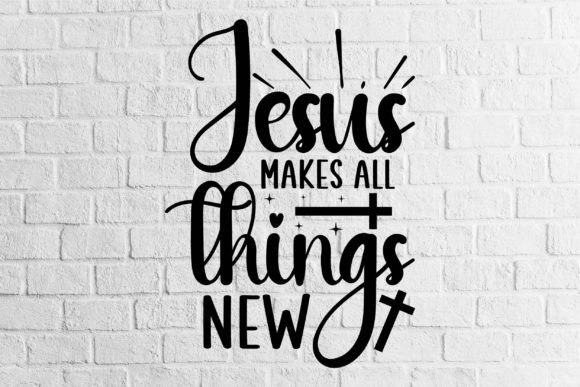
The first thing I noticed is how the lettering balances presence with warmth. The phrase Jesus Makes All Things New is not shouted. It is stated with quiet authority. The stroke weight suggests a brush or hand-lettered origin, which gives the design a tactile, human quality. This is critical for projects where the audience needs to feel a personal connection. In a world of cold sans-serif corporate typography, this kind of creative design stands out because it feels made, not manufactured. The spacing between letters is generous enough to maintain readability, but tight enough to keep the phrase cohesive as a single visual unit. For a brand identity built around themes of restoration, craftsmanship, or community, this asset could serve as a central emblem. It would work beautifully on a hero graphic for a website header, as the focal point of a product mockup, or as a repeating motif on packaging. The emotional tone is uplifting without being saccharine, which is a difficult balance to strike. This makes it suitable for both personal projects and professional client work.
Real Performance Across Formats and Platforms
I tested Jesus Makes All Things New in several real-world scenarios to see how it holds up under pressure. First, I placed it on a t-shirt mockup for a print-on-demand client. The design sat well on the fabric, scaling naturally without losing its hand-drawn character. I then dropped it into a product label layout for a small-batch candle company, and the visual hierarchy remained intact even when reduced to 3 inches wide. The file formats provided include EPS, PDF, SVG, and a 300 dpi transparent PNG at 2000 by 2400 pixels. That resolution is generous for most print applications, from stickers to poster sizes. The SVG format is vector-based, meaning I could open it in Illustrator and tweak the curves, adjust the spacing, or recolor it without losing quality. This is essential for any commercial design project where the asset needs to adapt to a brand's color palette. The transparent PNG saved me time when I needed a quick mockup for social media graphics. I simply dropped it onto a textured background and it blended cleanly, thanks to the anti-aliased edges. For digital product sellers and crafters using Cricut machines, the SVG and EPS formats are ideal for cutting and layering. The PDF is a reliable fallback for clients who prefer a universal format for review.
Where This Design Asset Shines Brightest
After several rounds of testing, I found that Jesus Makes All Things New performs best in large to medium-sized layout areas. It is a statement piece, not a supporting player. Use it as a hero graphic on a landing page, a central motif on a tote bag, or a bold accent on a poster. It works exceptionally well as a printable design for wall art, especially when paired with a subtle watercolor wash or a linen-textured background. For editorial design, it could anchor a full-page spread in a magazine or a devotional booklet. The asset also excels in themed collections. If you are building a seasonal campaign around the concept of new beginnings, this design ties everything together with a single visual hook. On social media, it drives engagement because the message is shareable and the aesthetic is photogenic. Instagram posts, Pinterest pins, and Facebook cover images all benefit from this kind of centered, high-contrast typography. For Cricut projects, the SVG file cuts cleanly on vinyl, making it suitable for mugs, journals, and wooden signs. The design is also a strong candidate for sublimation transfers, where the hand-lettered style prints beautifully on polyester fabrics and coated substrates.
Where Careful Placement Matters
No design asset is universal, and Jesus Makes All Things New has limitations that a smart designer should respect. At very small sizes, such as a 1-inch sticker or a favicon, the lettering loses some of its nuance. The thinner strokes may become hard to read, especially on low-resolution screens. For business cards or tiny labels, I would suggest using a simplified version or pairing it with a more legible secondary font. The design also struggles in crowded layouts. If you place it on a busy background with patterns, textures, or competing typography, the message gets buried. This asset needs breathing room. It works best with ample negative space around it. For minimalist branding projects, the hand-lettered style may feel too decorative if the rest of the brand is strictly geometric. In those cases, I would use it sparingly, perhaps as a single accent on a thank-you card or a hanging tag rather than across the entire identity. For professional corporate materials, such as annual reports or formal proposals, the organic character of this design may feel out of place. It is better suited for brands that value approachability, community, and handmade authenticity. Low-contrast scenarios, such as light gray on white, should be avoided entirely. The design needs contrast to maintain its visual impact.
Readability, Brand Consistency, and Emotional Trust
Readability is strong for a hand-lettered piece. The ascenders and descenders are well proportioned, and the word spacing is consistent. I tested it on a dark background with white lettering, and the message popped immediately. On a light background with dark ink, the design felt grounded and classic. This dual readability makes it versatile for both light and dark product applications. From a brand consistency standpoint, Jesus Makes All Things New can serve as a recurring visual anchor across a product line. If you are launching a small business around faith-inspired home goods, this design could appear on candles, mugs, journals, and apparel, creating a cohesive family of products. The emotional trust it builds comes from the sincerity of the lettering. It does not look like a stock asset. It looks like something a real person crafted. That authenticity resonates with audiences who are tired of generic branding. For Etsy sellers and print-on-demand entrepreneurs, this design can differentiate your shop from the thousands of templated listings. It signals that you care about the details. For web design, the asset can be used as a section header on a mission page or as a closing graphic on a blog post. Just make sure the surrounding layout supports the visual weight of the lettering.
Practical Designer Notes Before You Buy
Before you use Jesus Makes All Things New in a client project, run it through a few quick checks. First, convert it to grayscale and look at the contrast. The design should hold its shape without relying on color. Second, test it on both a pure white background and a dark charcoal background. The transparent PNG should have clean edges with no leftover halos. Third, preview it at 100 percent size on a mockup. The 2000 by 2400 pixel canvas is generous, but always check how it scales to your specific output. Fourth, open the SVG file in your vector editor of choice and inspect the paths. Look for unnecessary nodes or overlapping curves that could cause issues with cutting machines or print rendering. The EPS file should open cleanly in Illustrator and allow you to recolor the design without breaking the letterforms. Fifth, confirm the commercial license terms. If you are using this for a client project, a print-on-demand store, or a physical product line, make sure the license covers commercial use. Some creative marketplace assets have restrictions on the number of copies produced or the type of merchandise allowed. Finally, compare the design with different font styles. It pairs well with clean sans-serif fonts for a modern contrast, or with classic serif fonts for a more traditional feel. Avoid pairing it with another script or handwritten font, as the visual competition will confuse the hierarchy.
Why This Asset Belongs in Your Creative Library
After spending time with Jesus Makes All Things New, I can confidently say it is a useful addition to any designer's toolkit for faith-based, lifestyle, or handmade branding projects. It is not a niche asset that only works in one context. It adapts to packaging, apparel, print, digital, and social media. The file formats are professional-grade, the resolution is print-ready, and the vector files give you full control over customization. For a graphic designer, having a reliable design asset like this on hand means you can respond to client requests faster, iterate on mockups more efficiently, and deliver a final product that feels cohesive. Whether you are designing for a small business branding project, a seasonal campaign, a Cricut project, or a digital product line, this asset provides a strong visual foundation. It is the kind of piece that makes a client say, "Yes, that is exactly what I imagined." And in this business, that reaction is everything.